Catégorie : Thèmes-Topics

  • L’impression 3D ou la sculpture sans les mains

    Dans le cadre du Festival « Les Composites » organisé par l’Espace Jean Legendre à Compiègne, je participais le 17 mars à la journée d’échanges des « Rencontres nationales » sur le thème « La 3D : rendre réel ce qui est virtuel ».

    Le matin, ce sont les images en 3D, notamment dans le spectacle vivant, qui ont été évoquées par Clarisse Bardiot, Josette Féral, Michel Lemieux et Joris Mathieu assorti d’une présentation sur la suppléance perceptive par Charles Lenay.

    Clarisse Bardiot
    Clarisse Bardiot

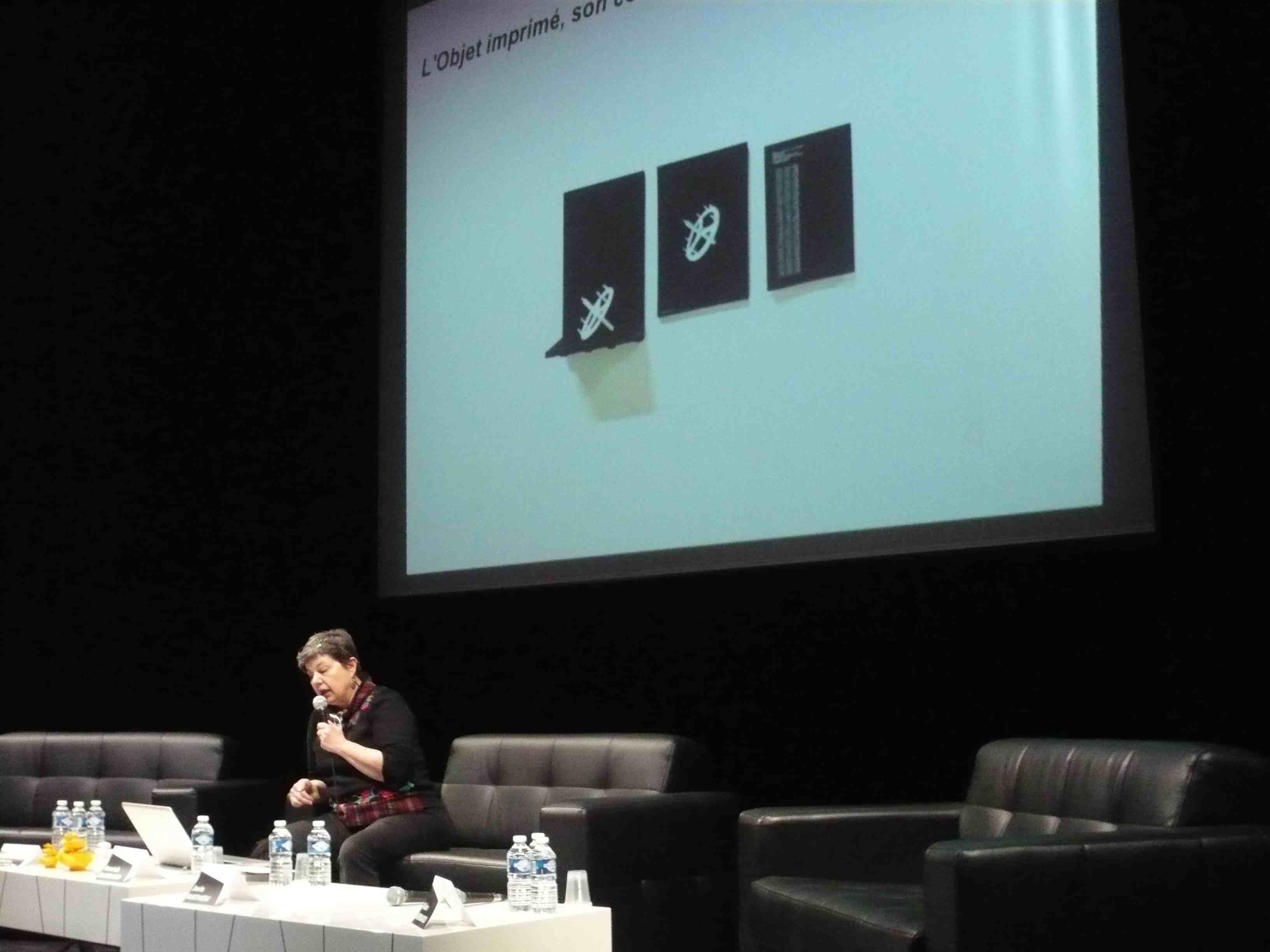
    L’après midi ce fut le tour des objets avec l’impression 3D, session où j’ai fait ma présentation intitulée « L’impression 3D ou la sculpture sans les mains », dans laquelle j’ai dégagé une typologie de cette création et où j’ai évoqué les nouveaux enjeux de cette sculpture numérique sans oublier de la replacer dans sa continuité historique avec les premières œuvres, dans les années 1990, des pionniers tels Alexandre Vitkine, Christian Lavigne ou encore Masaki Fujihata.

    Annick Bureaud
    Annick Bureaud
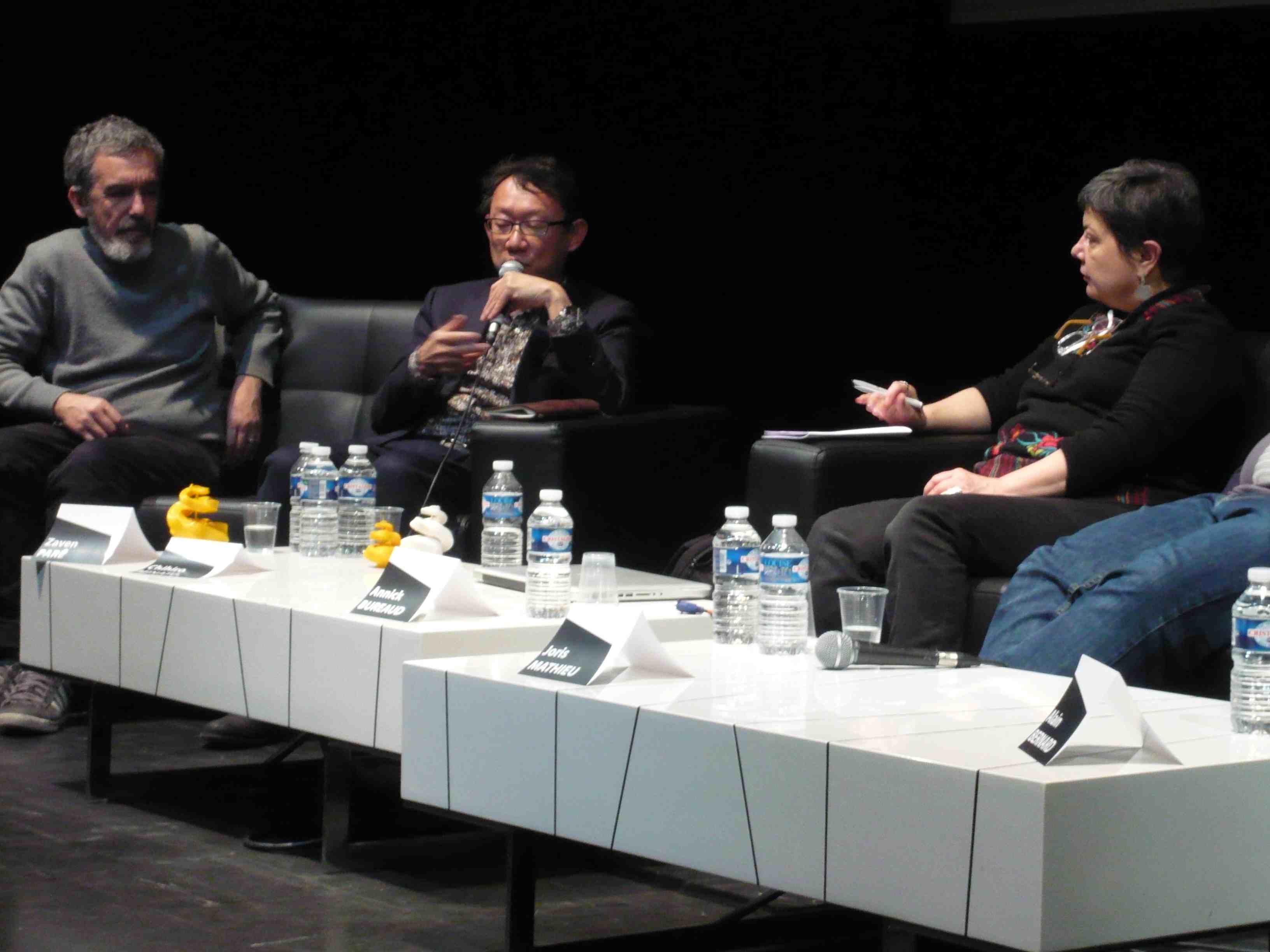
    Zaven Paré, Chihiro Minato, Annick Bureaud
    Zaven Paré, Chihiro Minato, Annick Bureaud

    Une table ronde sur le son 3D a clôt cette journée.

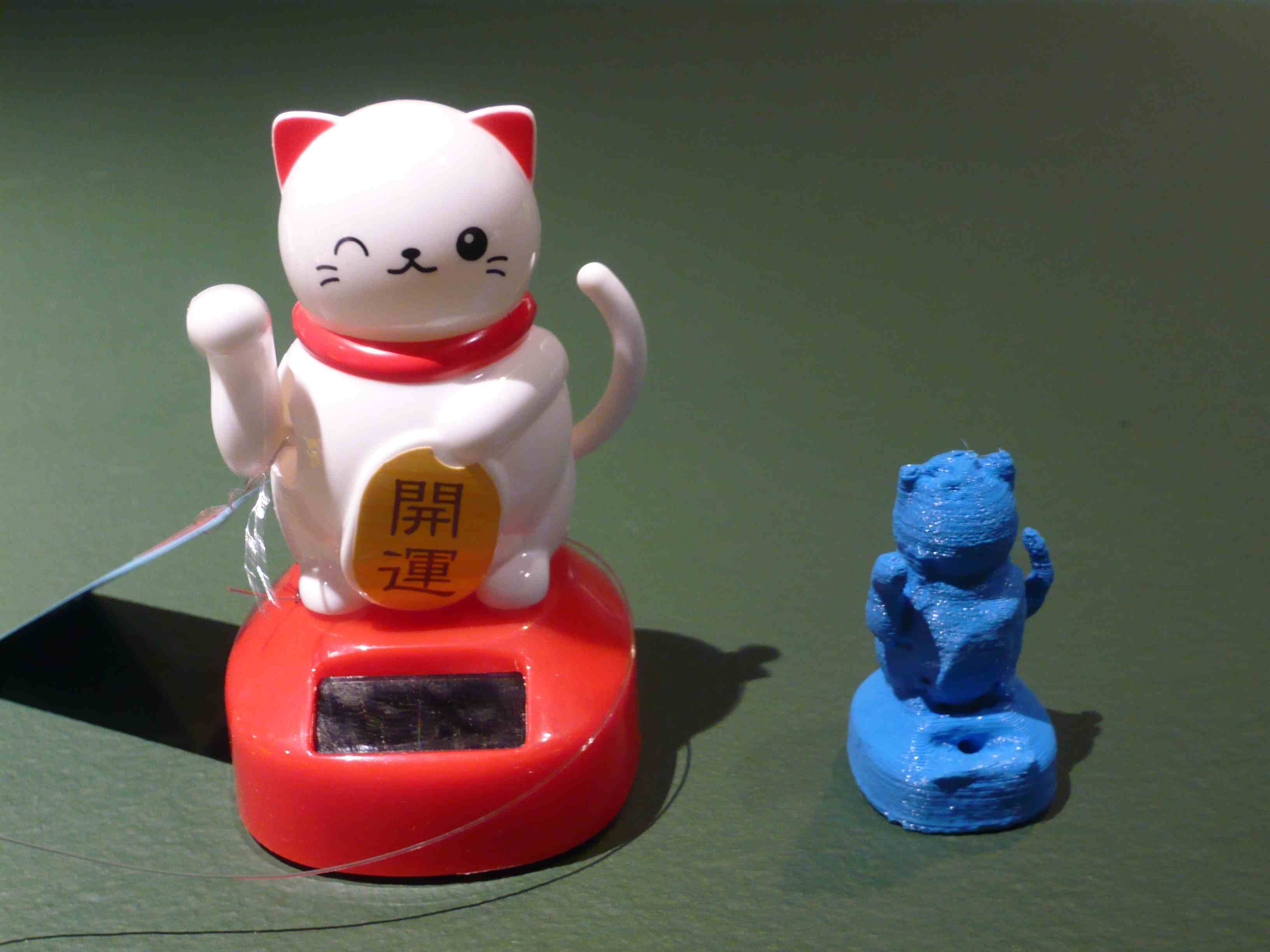
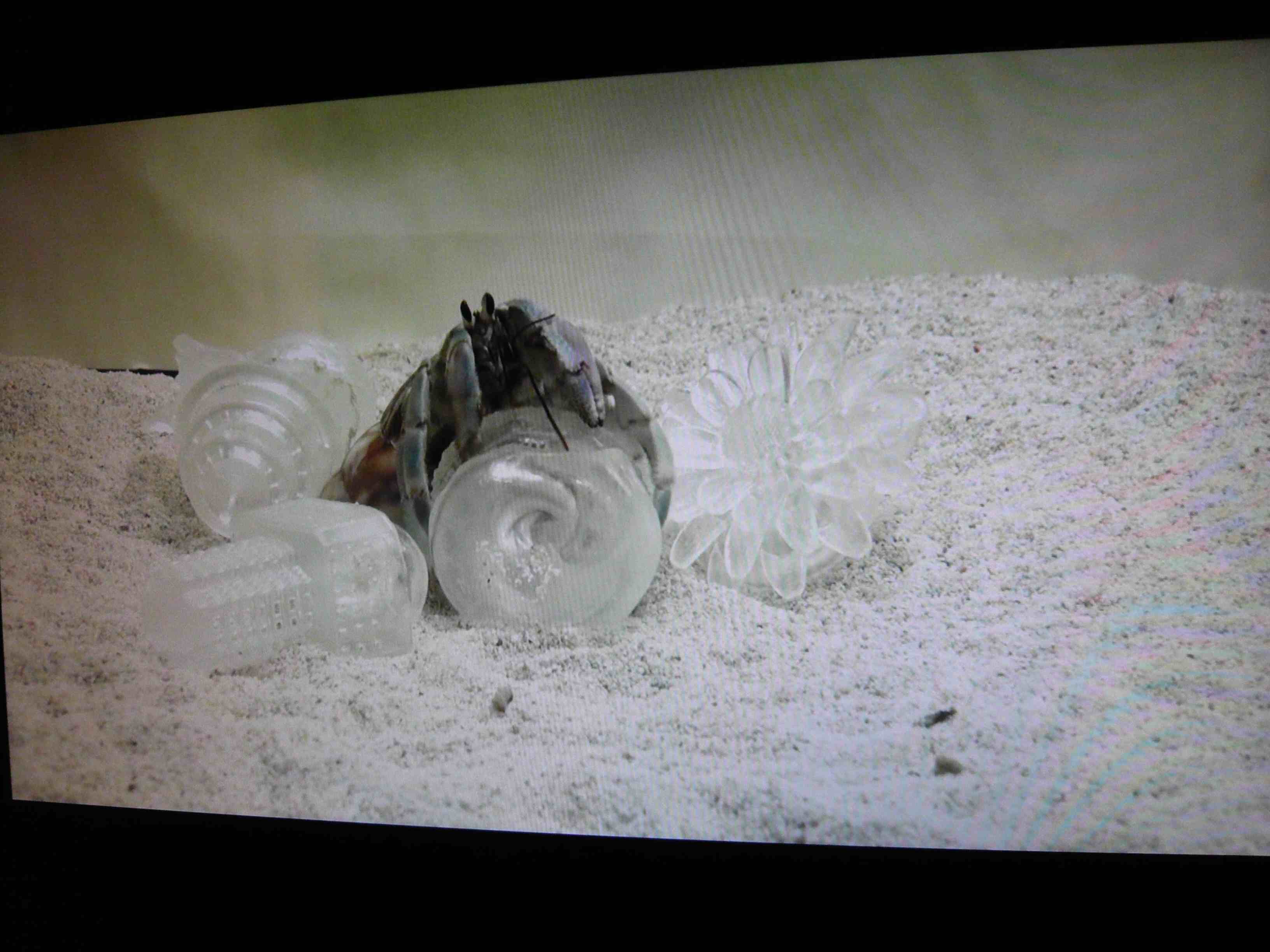
    L’exposition « Généalogie des objets 2.0 » proposée par Zaven Paré et Chihiro Minato montrait un échantillon de la création japonaise en impression 3D dont les œuvres magnifiques d’Aki Inomata, créations de coquilles pour des bernard l’hermites que j’avais découvertes à Ars Electronica en 2014 et Despatch, le satellite-sonde spatiale sous la direction de l’artiste Akihiro Kubota, lancé par l’agence spatiale japonaise JAXA en décembre 2014. J’y ai également découvert l’étonnant travail de Tomoya Watanabe qui scanne et reproduit en impression 3D des objets de décoration kitsch à 100 Yen (équivalent des boutiques à 1 $ au Canada ou des Troisfoisrien chez nous), ou comment rendre encore plus bas de gamme des objets kitsch bas de gamme.

    Tomoya Watanabe
    Tomoya Watanabe
    Aki Inomata
    Aki Inomata

    La journée s’est terminée avec Icare, le nouveau spectacle de Michel Lemieux et Victor Pilon.

  • Cabaret de curiosités #14 – Ailleurs, ici l’espace

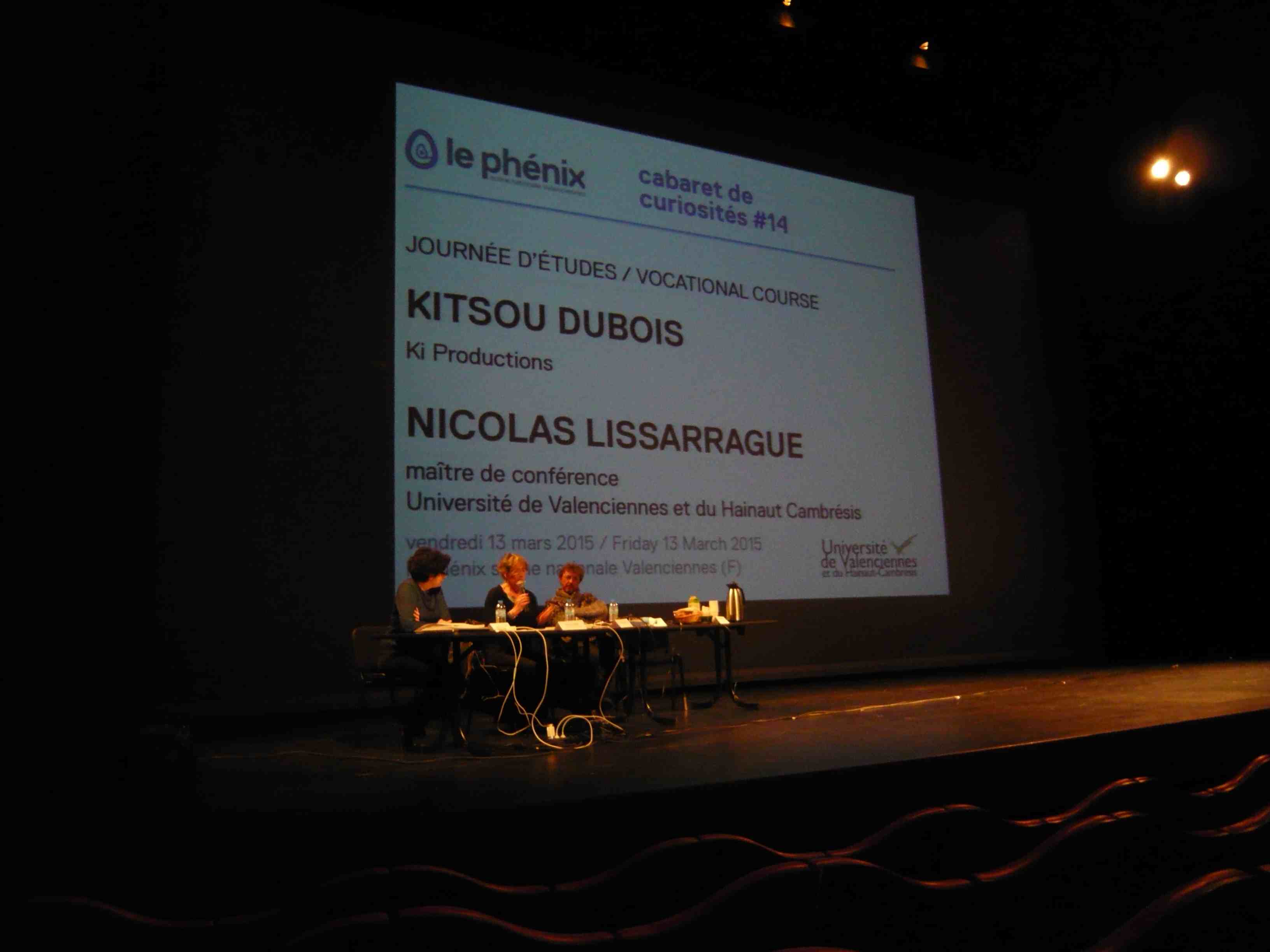
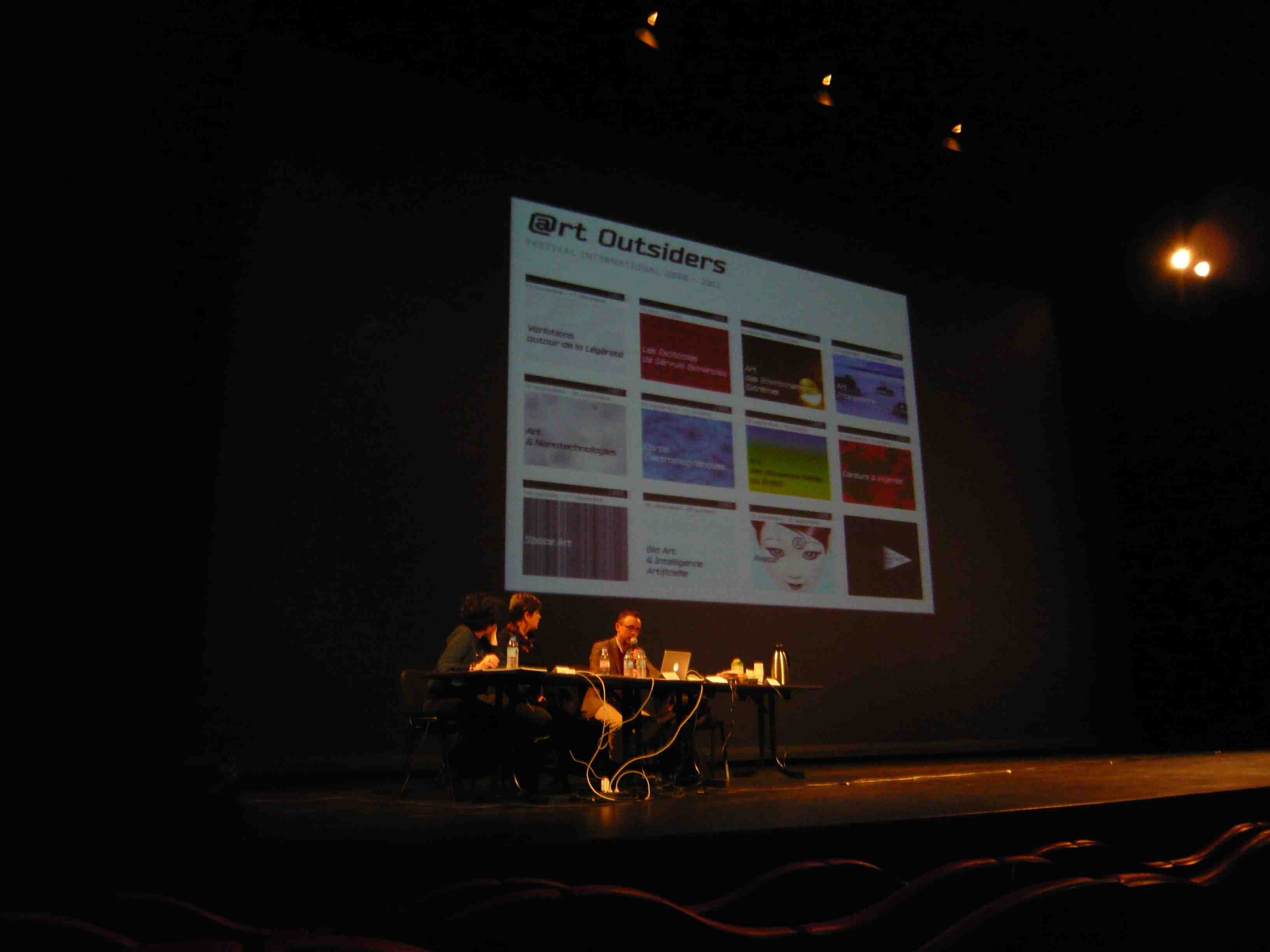
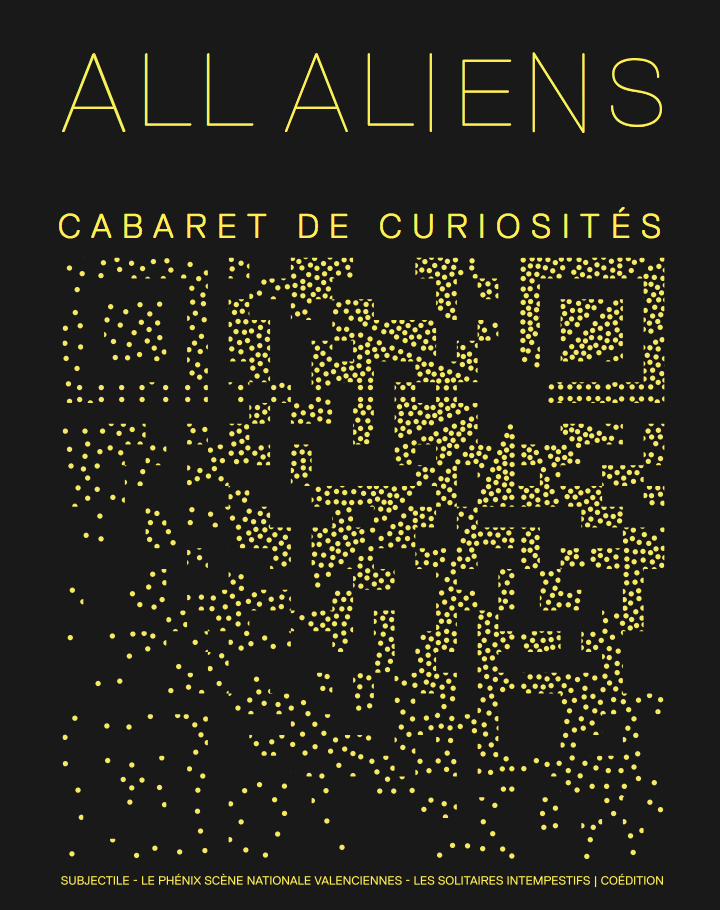
    En ce vendredi 13 mars, beau moment de rencontres et de discussion au Phénix, à Valenciennes autour de l’art et de l’espace dans le cadre du Cabaret de curiosités #14 sur le thème « All Aliens ! » avec Kitsou Dubois et Nicolas Lissarague, Halory Goerger, Jean-Luc Soret, Ewen Chardronnet, Clarisse Bardiot et moi.

    Ma présentation s’intitule « Art out of this World. Un parcours dans l’art spatial à travers la revue Leonardo ».


    Kitsou&NicolasSoret-Bardiot-Bureaud

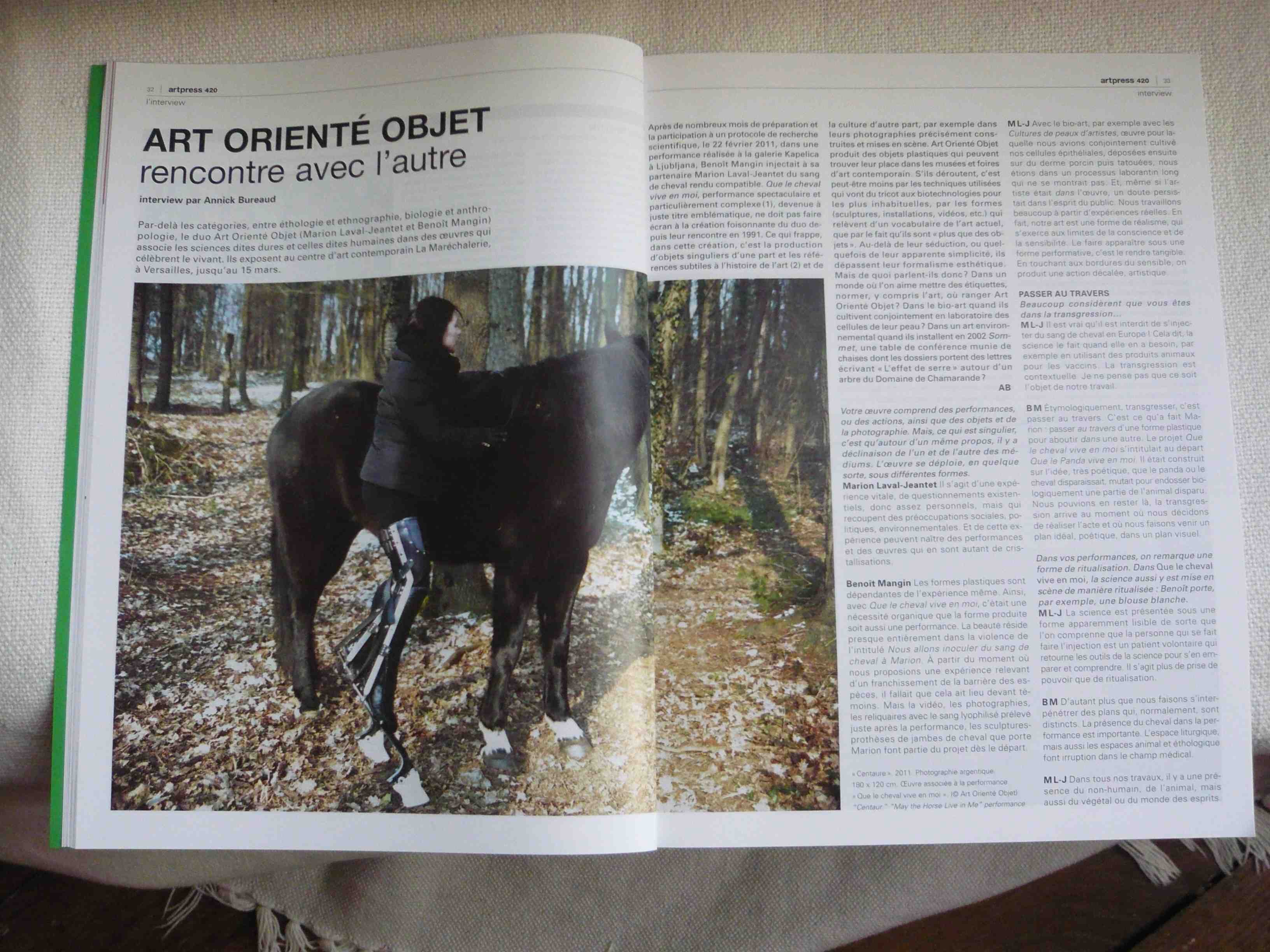
  • « Art Orienté Objet. Rencontre avec l’Autre », interview dans artpress

    L’entretien que j’ai fait avec Marion Laval-Jeantet et Benoît Mangin, du duo Art Orienté Objet est paru dans le numéro 420 d’artpress, de mars 2015.

  • Aurelia 1 + Hz / proto viva sonification, Robertina Sebjanic

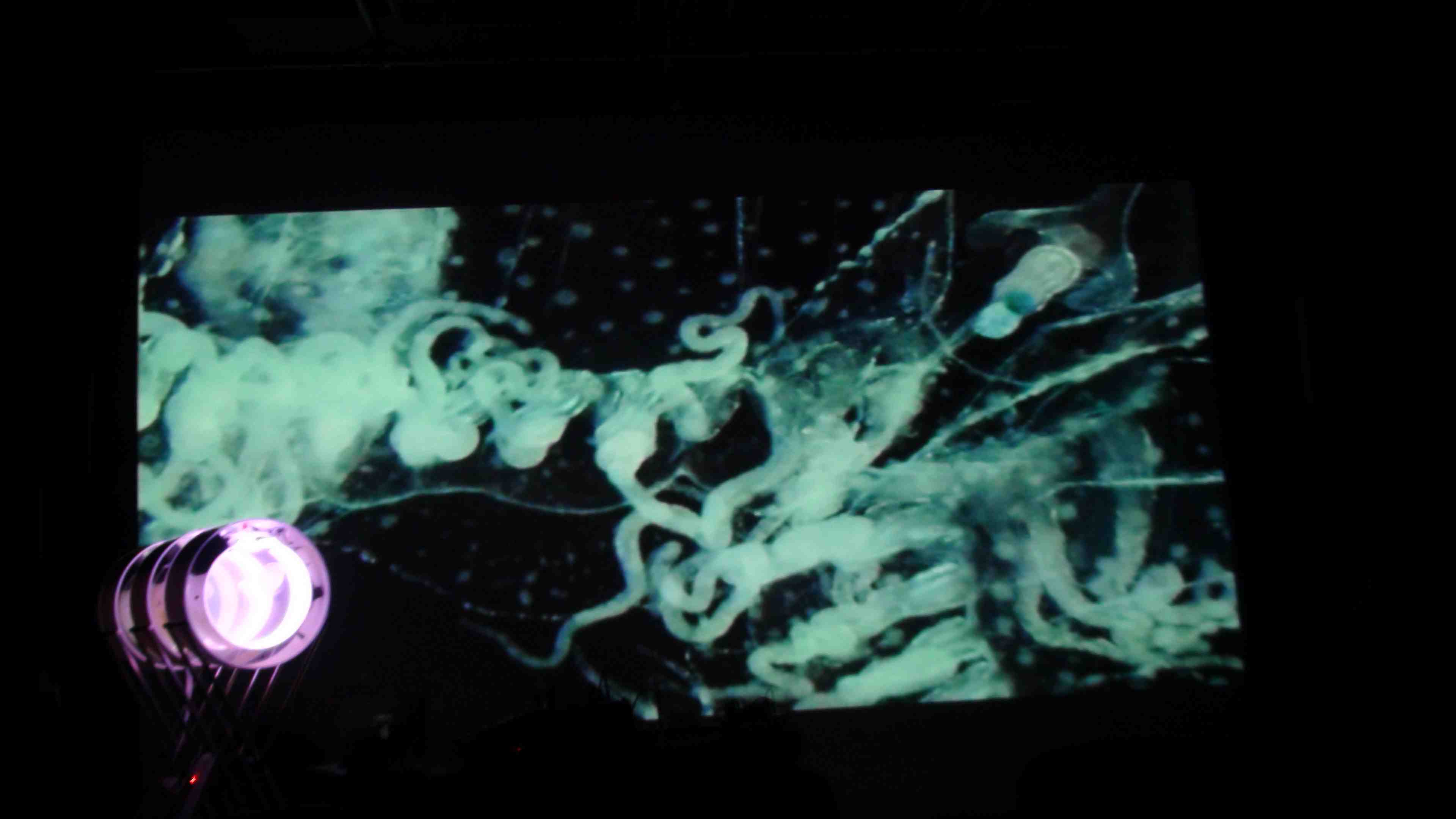
    Le 6 février 2015, Robertina Sebjanic présentait sa performance Aurelia 1 + Hz / proto viva sonification organisée par Décalab au Cube, suivie d’une table-ronde que j’ai eu le plaisir d’animer et à laquelle participait également le conservateur d’aquarium Guillaume Eveillard.

    L’occasion d’une Rencontres du Troisième Type avec les méduses de Robertina.


  • Nouveautés 2015 pour Leonardo/Olats

    L’année commence en beauté pour les projets avec Leonardo/Olats

    Elle voit en effet, d’une part le lancement du projet européen Trust Me, I’m an Artist sur bioart, médecine et éthique et d’autre part le lancement d’Audiolats, les « pastilles à sucer pour l’oreille », autrement dit la collection de publications sonores que je mets en place avec Jean-Luc Soret sur la plateforme de Creative Disturbance.

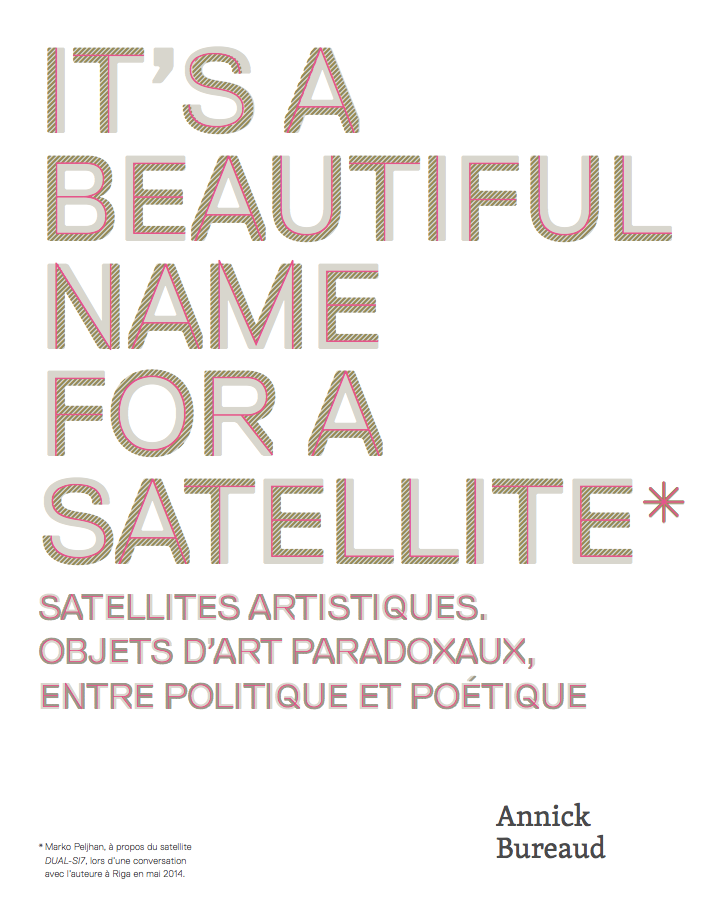
  • ‘It’s a beautiful name for a satellite’. Satellites artistiques. Objets d’art paradoxaux, entre politique et poétique

    « Spoutnik, objet intégral —politique, idéologique, démiurgique, technique, performatif, utopique et esthétique—, balise inaugurale de l’extension de l’espace public à l’espace circumterrestre, impressionna le monde et les artistes.

    Plus d’un demi-siècle plus tard, en 2013 et 2014, trois satellites artistiques furent mis en orbite, les premiers parmi plus d’une vingtaine de projets portés par plusieurs générations d’artistes depuis les années 1970/80.  [….]

    Un satellite artistique est la construction en tant qu’œuvre d’un objet-instrument qui doit se conformer aux conditions de l’environnement auquel il est destiné et aux règles pour y être envoyé. Objet technique, quelles sortes d’objet d’art peut-il être ? Quelles formes, esthétiques ou discours ont été et sont proposés ? Quelles sont les différences et les similitudes entre les projets des années 1980 et ceux d’aujourd’hui ?  [….] »

    La suite de mon article « It’s a beautiful name for a satellite ». Satellites artistiques. Objets d’art paradoxaux, entre politique et poétique se trouve dans l’ouvrage All Aliens, publié par Clarisse Bardiot dans la collection « Cabarets de curiosités » (Valenciennes ; Besançon : le Phénix ; Subjectile ; les Solitaires Intempestifs, 2015). On peut se le procurer ici.

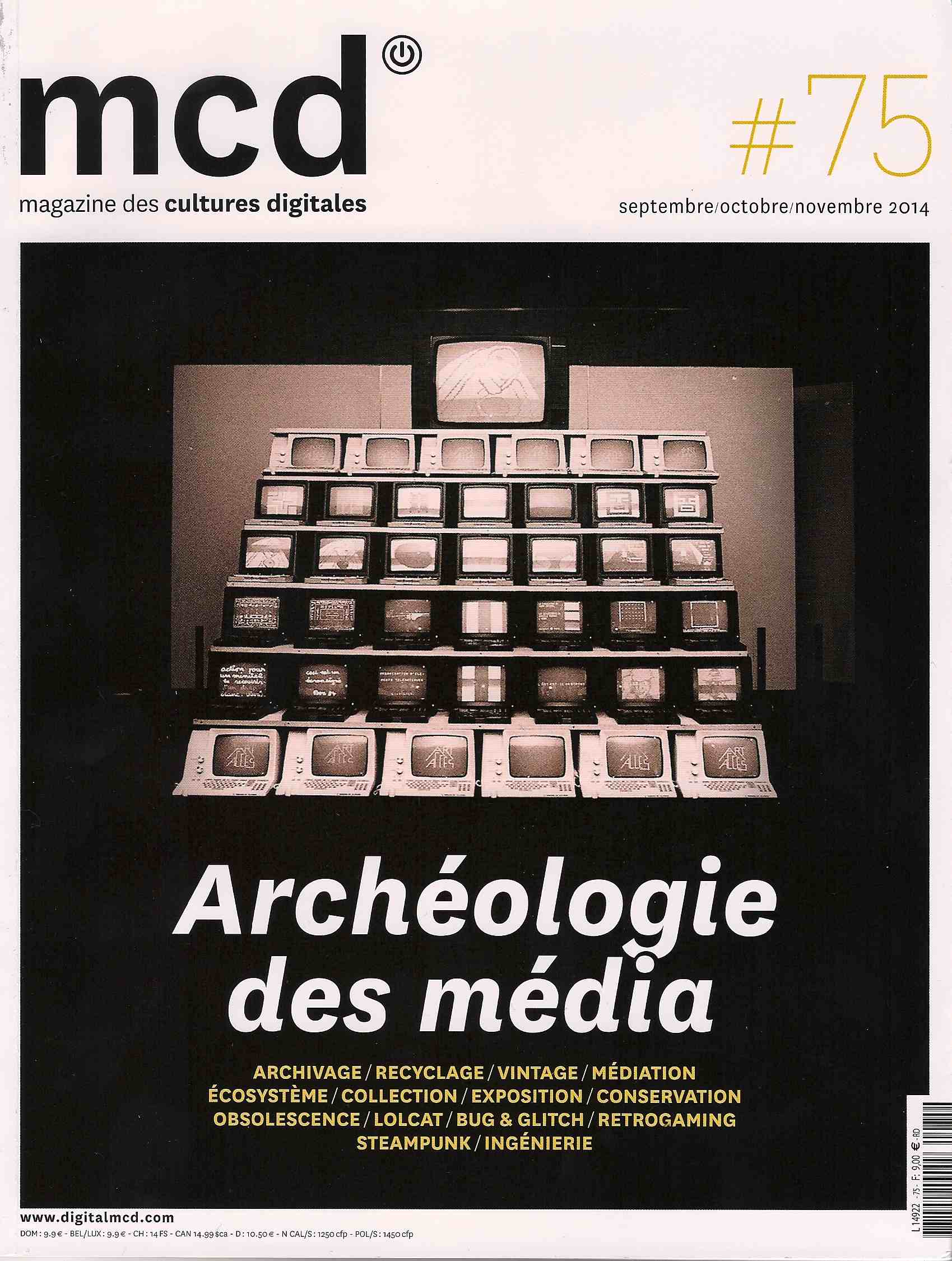
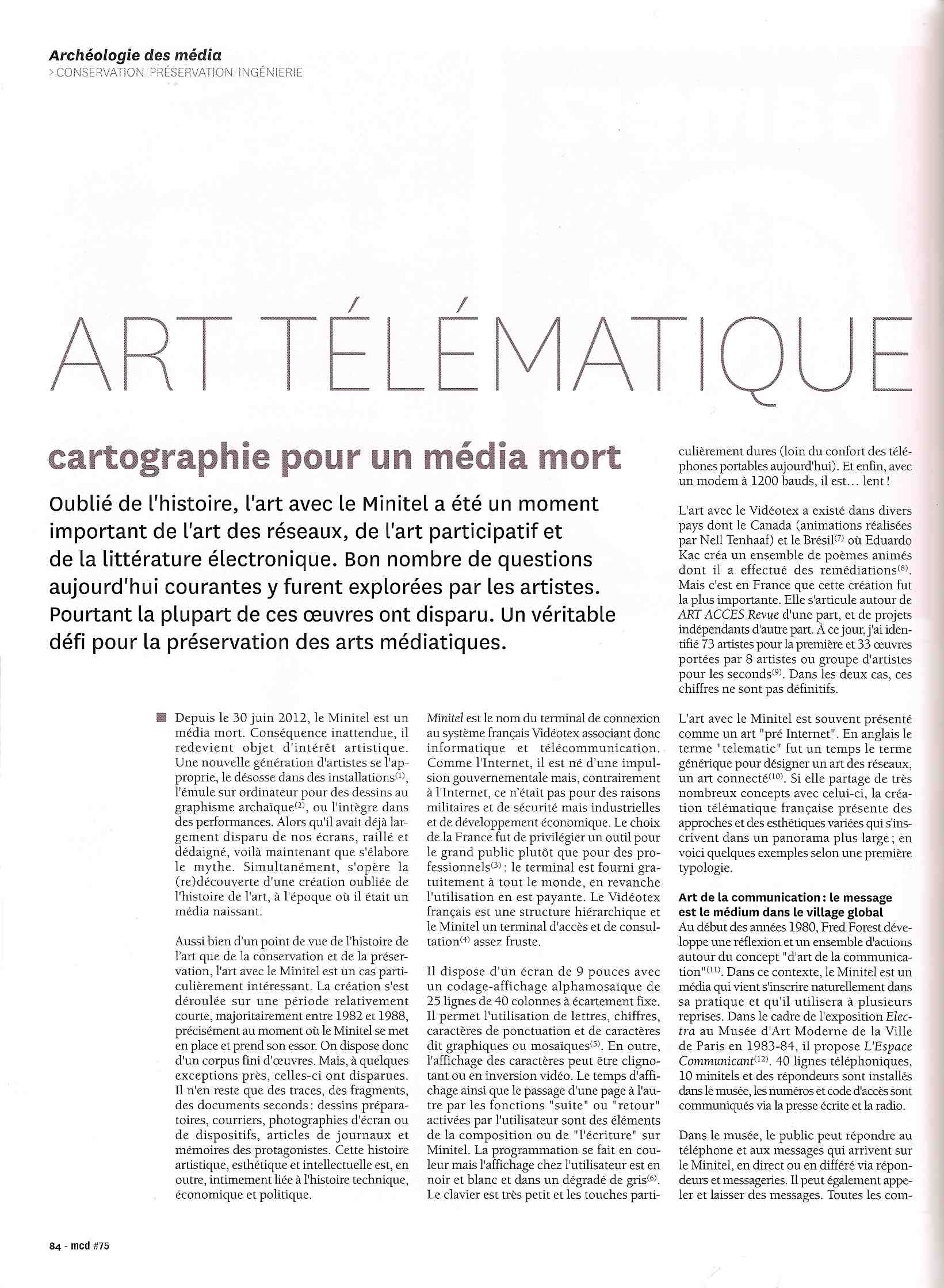
  • Art télématique. Cartographie pour un média mort – MCD #75

    Mon article Art télématique. Cartographie pour un média mort est paru dans le numéro 75 de MCD de l’automne 2014 consacré à l’archéologie des médias.

    La photo de l’installation de minitels d’ART-ACCES fait la couverture.

  • Etudes et cahiers de tendance

    Cette année, j’ai réalisé deux études (cahiers de tendance) pour Décalab

    – BioArt – Bio Design. Concevoir pour l’anthropocène (mars 2014)

    – Impression 3D. Quand le virtuel s’incarne dans le réel ou la sculpture sans les mains (juillet 2014)

    D’autres sont en préparation.

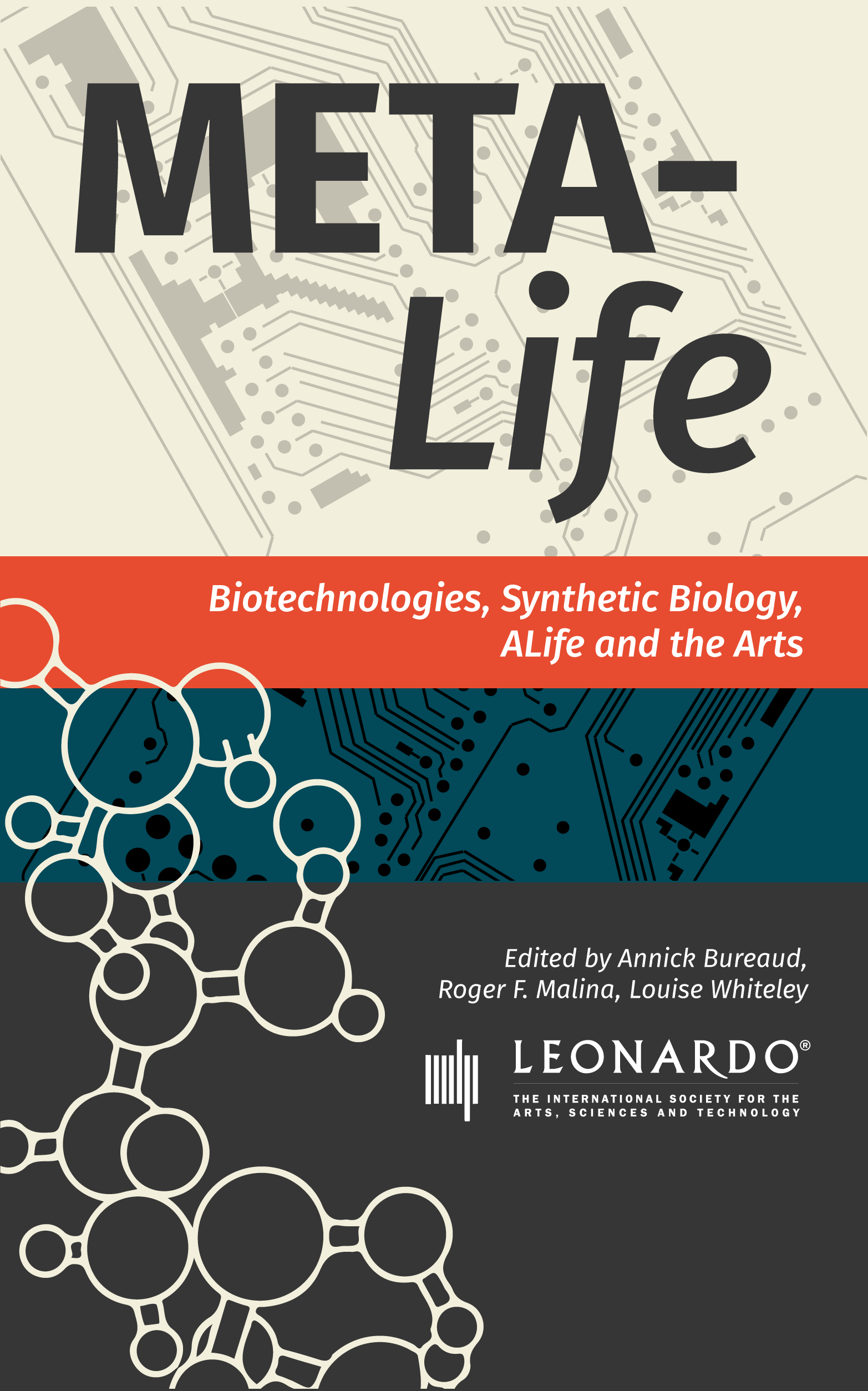
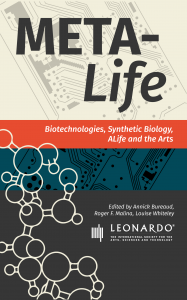
  • META-LIFE: Biotechnologies, Synthetic Biology, A-Life and the Arts

    It is my great pleasure to announce the publication of the Leonardo – MIT Press ebook Meta-Life. Biotechnologies, Synthetic Biology, ALife and the Arts that I co-edited with Roger Malina and Louise Whiteley.

    It is a real « mammoth »: 45 articles – 691 pages (not sure how you count an electronic book pages but if Amazon and MIT Press say so, we believe them!) and all that for the price of a bottle of sparkling water in a Parisian brasserie, that is 8.23 US $ (yep ! I paid 6 € for one recently …). But more seriously, here a short text of presentation of the book and its table of content.

    META-LIFE: Biotechnologies, Synthetic Biology, A-Life and the Arts

    A Leonardo-MIT Press e-book edited by Annick Bureaud, Roger Malina and Louise Whiteley

    Editorial Committee: David Benqué, Annick Bureaud, Oron Catts, Matthew Gardiner, Roger F. Malina, Nell Tenhaaf, Ruth West, Louise Whiteley

    AMAZON URL: http://www.amazon.com/dp/B00LI69BQO

    An exo-life may not come from outer space hiting the Earth riding a meteorite but very well from the lab, designed by a scientist —unless it is an artist— weaving biology and computing in a petri dish or a bioreactor as a vessel.

    With biotechnologies, synthetic biology and Artificial Life, artists have opened new avenues in the artworld, going from still to autonomous objects to living creatures, exploring the thin border between animate and inanimate, confronting the grown, the evolved, the born and the built, raising aesthetical but also social, political and ethical issues.

    In this ground breaking collection, the editors have commission new original essays by key figures in these fields and collected over 40 articles previously published in the Leonardo Journal that document the ideas and practice of artists involved in these areas as well as theoreticians and historians.

    Chapters include: Between Bio, Silico and Synthetic: Of Life and Arts; Artificial Life and the Arts; Bioart; Bio-Fiction, Design, Architecture; DIY Biology-Biohacking (see below for full Table of Contents).

    This ebook has a web companion

    The Meta-Life e-book is a project by Leonardo/Olats as an outcome of the European Studiolab Project ), supported by the European Commission Seventh Framework Programme, in partnership with Leonardo/ISAST and MIT Press and in collaboration with ATEC at the University of Texas at Dallas.

    Table of Contents

    Preface, Roger Malina, Meta-Life: « Aha » Moments That Drive Art-Science

    Introduction, Annick Bureaud, « Art at the Future Tense »

    1 – Between Bio, Silico and synthetic: of Life and arts

    – Nell Tenhaaf, « “Trust Regions” for Art/Sci », 2014

    – Oron Catts & Ionat Zurr, « Countering the Engineering Mindset: The Conflict of Art and Synthetic Biology, 2014

    – Amy M. Youngs, « The Fine Art of Creating Life », 2000

    – Michael John Gorman, « The Sweet Smell of Synthetic Biology, GROW YOUR OWN… Life After Nature, at Science Gallery », 2014

    – Matthew Gardiner & Al. « Project Genesis: Ars Electronica », 2014

    2 – ARTIFICIAL LIFE AND THE ARTS

    2.1 – ALife – At the Crossroad of Art, Science and Philosophy

    – Nell Tenhaaf, « As Art Is Lifelike: Evolution, Art, and the Readymade », 1998

    – Edward A. Shanken, “Life as We Know It and/or Life as It Could Be: Epistemology and the Ontology/Ontogeny of Artificial Life », 1998

    – Kenneth E. Rinaldo, “Technology Recapitulates Phylogeny: Artificial Life Art”, 1998

    – Ursula Huws, “Nature, Technology and Art: The Emergence of a New Relationship?”, 2000

    – Mark Bedau, “The Scientific and Philosophical Scope of Artificial Life”, 2002

    – Alvaro Moreno, “Artificial Life and Philosophy”, 2002

    2.2 – ALife – Artworks

    – Sommerer Christa, Mignonneau Laurent, “Art as a Living System: Interactive Computer Artworks”, 1999

    – Ray Thomas S., « Aesthetically Evolved Virtual Pets », 2001

    – Jane Prophet, “Sublime Ecologies and Artistic Endeavors: Artificial Life and Interactivity in the Online Project TechnoSphere”, 1996

    – Bruce Damer, “The Cyberbiological Worlds of Nerve Garden: A Test Bed for VRML 2.0”, 1998

    – Kusahara Machiko, « The Art of Creating Subjective Reality: An Analysis of Japanese Digital Pets », 2001

    – Anna Dumitriu and Blay Whitby, “Cybernetic Bacteria 2..0, 2011

    – Nell Tenhaaf, « Art Embodies A-Life: The VIDA Competition », 2008

    3 – BIOART

    3.1 – BioArt – Creating with Living Matter

    – Adam Zaretsky, « Viva Vivo! Living Art Is Dead”, 2004

    – Steve Tomasula, “Genetic Art and the Aesthetics of Biology”, 2002

    – George Gessert, “Bastard Flowers”, 1996

    – Suzanne Anker, “Gene Culture: Molecular Metaphor in Visual Art”, 2000

    3.2 – BioArt – Creations

    – George Gessert, “Notes on Genetic Art”, 1993

    – Eduardo Kac, “GFP Bunny”, 2003

    – Marta de Menezes, “The Artificial Natural: Manipulating Butterfly Wing Patterns for Artistic Purposes”, 2003

    – Catts Oron, Zurr Ionat, « Growing Semi-Living Sculptures: The Tissue Culture & Art Project », 2002

    – Catts Oron, « Not Moving – Living », 2014

    – Tagny Duff, Jill Muhling, Maria Grade Godinho and Stuart Hodgetts, “How to Make Living Viral Tattoos”, 2011

    – Patricia Noronha, “Yeast Biopaintings: Biofilms as an Artistic Instrument”, 2011

    – Polona Tratnik, “37°C: From the inside of a Being to the Thin Line of Life”, 2005

    – Zurr Ionat, « The Animation of Lab-Grown Life: Tissue Engineered Muscle Actuator (TEMA) », 2014

    – Julie Clarke, “Corporeal Mélange: Aesthetics and Ethics of Biomaterials in Stelarc and Nina Sellars’s Blender”, 2006

    – Pelling Andrew E., « Re-purposing The Behaviour and Motion of Living Cells in an Anti-Disciplinary and Curiosity-Driven Context », 2014

    – Hilton Craig, « The Immortalisation of Billy Apple®: An Art-Science Collaboration », 2014

    – Tony Bellaver, “Teaching Nature How to Become Nature: The Woodland Recovery Project”, 1998

    4 – BIO — FICTION, DESIGN, ARCHITECTURE

    – Judy Malloy, « OK Research, OK Genetic Engineering, Bad Information: Information Art Describes Technology, 1988

    – Tran T. Kim-Trang and Karl Mihail, “Gene Genies Worldwide », 2003

    – David Benqué, « Blueprints for the Unknown, Questioning the « Design » of Life », 2014

    – Dennis Dollens, “Architecture as Nature: A Biodigital Hypothesis”, 2009

    – Bakke Monika, « Living (On) Dust: Around the Globe with Mineral Particles & Microbial Hitchhikers », 2014

    5 – DIY BIOLOGY –  BIOHACKING

    – Morgan Meyer, « Hacking Life? The Politics and Poetics of DIY Biology », 2014

    – Alessandro Delfanti, « Is Do-It-Yourself Biology Being Co-Opted by Institutions? », 2014

    – Denisa Kera, « Do-It-Yourself biology (DIYbio): Return of the Folly of Empiricism and Living Instruments », 2014

    – Nurit Bar Shai, « GenSpace, New York, Art & Science at Genspace, Brooklyn’s Community Biotech Lab », 2014

    – Cathal Garvey (interview by David Benqué), 2014
  • Meet to Delete! Erasing and Shredding at Galerie Up

    Meet to Delete! 26 avril 2014

    Meet to Delete! Bruxelles Event Report

    Saturday April 26th 2014 17h00 – 21h00 local time – Galerie Up – Bruxelles

    We had a lovely Meet to Delete! event in Bruxelles at Galerie Up as part of Julian Priest project The Weight of Information.

    The Gallery is a small 20 square meter space in the Saint-Gilles area of Bruxelles, launched and owned by Clarisse Bardiot.

    On the left side of the Gallery we put a small round table with a shredder and a pot with colored pens. People could sit at the table —or stand by it— to shred the documents they had brought or delete datas from their cell phones, in a symbolically intimate and focused act.

    Next to the table, we had suspended a roll of paper onto which people could write their first name and the nature of the infomation they just deleted.

    On the right side of the Gallery, we videoprojected the orbital path of the satellite. A candle was lit in the opposite corner as an evocation of the bonfire we could not do indoors. A poster was displayed next to it, another one was on the door of the gallery and 3 others on the gallery window.

    A 9 slide Power Point about the project was available on an iPad for people to browse.

    Drinks and light snacks (chips, olives) were served.

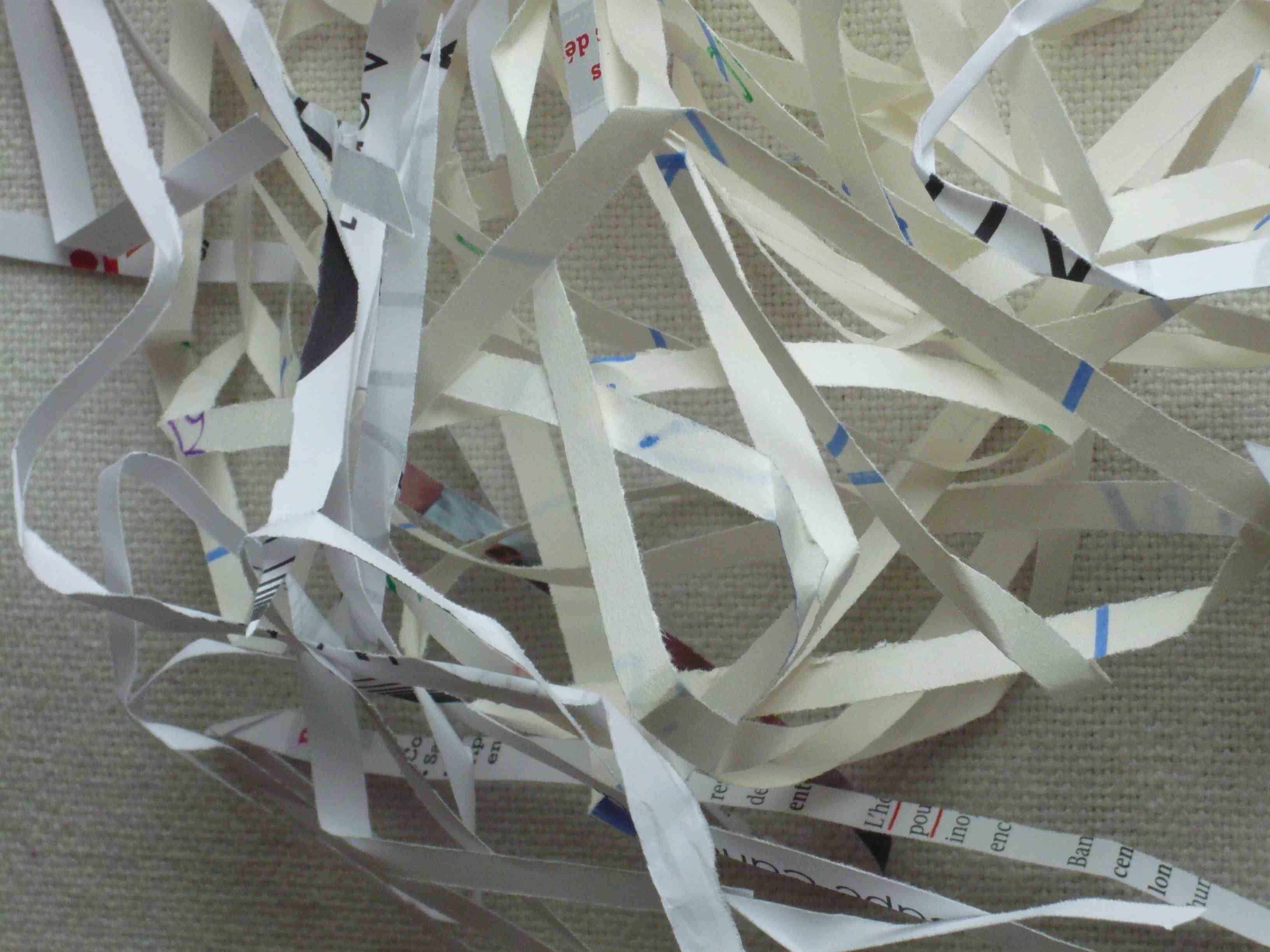
    At the end of the event, Clarisse and I took a picture of the roll of paper, then we shredded the roll and the posters, and we blew up the candle.

    The meta data of the event that we shall keep are the list of items written on the roll, samples of shredded documents and the picture of the shreds.

    About 20 people attended the event, among them some children. Most of them came around the same time, which allowed for nice exchanges.

    Many questions were asked about The Weight of Information satellite and the whole project.

    What came out of the discussions was that we all delete stuff without necessarily thinking about it but when asked to do it consciously, and in a collective set up, it raises a different approach and feelings to the act of deleting data. Here some that were stated:

    . Deleting data and information belongs to the private realm, doing it collectively is, in a certain manner, sharing some sort of privacy.

    . Every one reported that they had to think about what they would delete.

    . It is difficult to decide and choose what to delete [in the framework of the Meet to Delete! event], it is giving a weight to something that has no —or no more— value, that we want to get rid of and in a kind of a paradox giving it, for this moment, a central place.

    . The notion of loss was also mentioned.

    . It takes time to delete, that is it takes our attention. There is a sort of paradox to isolate mentally oneself from the group to focus on the deleting process.

    We had also many informal conversations, some related to social and political issues of (storing) digital data!

    For me, the most lovely moment was when one of kid, after having understood what it was all about, deleted « 2 files from his DS ».

    It was a joyfull and friendly event, extremely rewarding intellectually and in terms of human relations.

    Thank you Julian for this beautiful project, Clarisse for having hosted it and Alexi for the caring support, everyone that came to Galerie Up and Zac for the idea of the Sprite satellites.

    This has allowed for a generous, sharing, poetic and light moment.

    And here the list of items that were deleted, following Julian Priest’s listing system:

    012 Carte de rendez-vous médicaux

    013 Ticket de caisse

    014 Suppression d’un SMS de help-base

    015 Ticket de caisse

    016 SMS envoyés: 278

    017 Journal des appels

    018 Lettre de relance de la bibliothéque

    019 Courrier mutuelle santé

    020 Courrier MSF

    021 Facture de location de voiture

    022 Relevé bancaire

    023 Cours de math sur les limites de Mael

    024 Mail d’alerte GANDI

    025 65 SMS – 2012

    026 78 contact gmail ESAD VAC

    027 Deux dossiers sur ma DS

    028 A effacé les photos

    Annick – 2014-04-27